

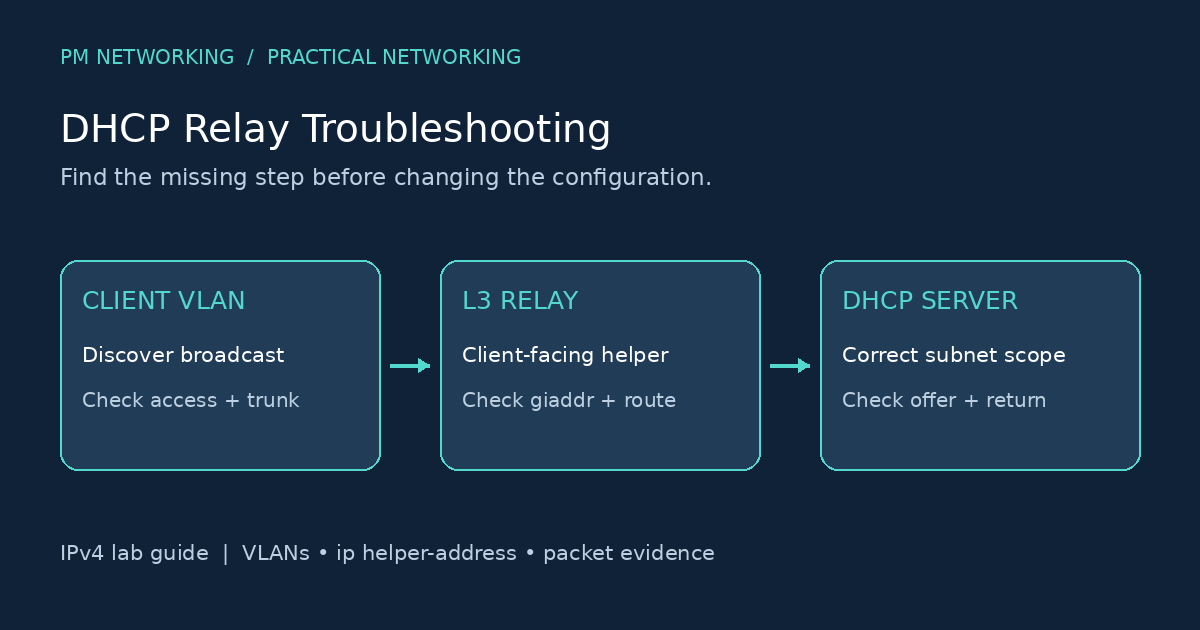





CCNP Enterprise preparation can help you move beyond basic configuration into understanding, operating and troubleshooting larger networks. Its value depends on how closely the skills match your intended role and how much practical work you do alongside the theory. A certificate is useful evidence of study, but it does not replace experience or guarantee a salary increase.
What ENCOR and ENARSI contribute
ENCOR is the enterprise core exam. ENARSI is a concentration focused on advanced routing and services. Together they offer one route to CCNP Enterprise; other concentration choices also exist. Training completion and passing Cisco’s exams are separate milestones. See the official certification requirements for the current pathway.
Five practical benefits of the learning process
1. Connect configuration to design
Instead of treating every command as an isolated task, examine why the network is built that way. Consider how routing policy, redundancy and segmentation affect traffic. Draw the intended forwarding path and then compare it with the actual behaviour in a lab.
2. Develop structured troubleshooting
Practise separating a symptom from its cause. A routing neighbour may be established while a prefix is missing; an installed route may still lead to a return-path problem. Collect evidence, form a hypothesis and change one thing at a time. Our ENARSI lab checklist provides a starting structure.
3. Explain your technical decisions
A useful preparation habit is to narrate your reasoning: what did you observe, which alternatives did you rule out and how did you verify the fix? This makes a lab more valuable than a copied configuration and gives you specific work to discuss in a technical interview.
4. Identify gaps in your knowledge
A structured syllabus can reveal areas that your current job rarely exposes you to. Keep a checklist of topics you can explain, configure and troubleshoot. Use the weakest areas to plan the next practice session instead of repeating only familiar exercises.
5. Build a portfolio of lab evidence
Document a small set of scenarios with topology diagrams, a baseline, the fault, diagnostic outputs and a verified resolution. Use original lab material and remove any employer or customer information. The aim is to demonstrate your method and understanding.
Does CCNP guarantee better pay or job security?
No certification guarantees employment, promotion, a salary increase or protection from redundancy. Outcomes depend on your experience, location, available roles, interview performance and the employer’s needs. Compare actual requirements for the roles you want and assess whether the training closes a relevant gap.
Separate the costs of training, exam bookings, practice tools and your study time. The CCNP cost guide helps distinguish training fees from examination costs.
When should you consider this pathway?
It may suit you if you already understand CCNA-level fundamentals and want deeper enterprise networking practice. If subnetting, VLANs and routing-table lookup are still difficult, strengthen those first. You do not need to dismiss CCNA as insufficient: it serves a different level and learning purpose.
How to choose a course
Ask to see the current syllabus and representative lab exercises. Check whether you will receive feedback, what equipment or software you need, the batch timetable and the terms of recording access. Compare the live ENCOR and ENARSI course and recorded option against your schedule and learning needs.
Frequently asked questions
Is ENARSI mandatory for every CCNP Enterprise candidate?
It is one concentration option. Check the available concentrations before choosing.
Does attending a course award Cisco certification?
No. Meeting Cisco’s examination requirements is separate from completing institute training.
What should I practise first?
Start with a working topology, verify its baseline and introduce a small fault. Explain the evidence behind your diagnosis before applying a repair.
For exam roles and study order, read the ENCOR versus ENARSI guide. Reviewed 7 November 2026.

PM Networkingis an emerging leader in the ed-tech space, founded by Praphul Mishra in 2020 with a vision to democratize tech education. The journey of PM Networking began as a YouTube channel with the sole purpose of sharing valuable knowledge in the fields of Networking, Cyber Security, and Cloud Computing. What started as a humble effort to educate has rapidly evolved into a comprehensive online learning platform that caters to the growing demand for specialized IT skills.PM Networking stands out in the crowded ed-tech industry by providing affordable, world-class training tailored to the needs of aspiring IT professionals. The platform is dedicated to equipping learners with the skills and knowledge required to excel in the highly competitive tech industry. Whether it’s Networking fundamentals, advanced Cyber Security protocols, or mastering the complexities of Cloud Computing, PM Networking offers a range of courses designed to cater to different levels of expertise.
0 Comments