





Three letters show up constantly in networking: LAN, MAN and WAN. They sound similar, and students often mix them up in interviews and exams. The difference actually comes down to one simple idea: how big an area the network covers. Once that clicks, everything else about LAN, MAN and WAN difference falls into place.
What is a LAN?
LAN stands for Local Area Network. It covers a small, defined area — a single building, office, home or campus. Devices in a LAN are usually connected through switches and cables, or Wi-Fi, and the network is typically owned and managed by the organization or individual using it.
Think of your home Wi-Fi network, or the network inside a single office floor — that’s a LAN. If you want a deeper dive into how LANs work, our What is LAN blog covers it in detail.
What is a MAN?
MAN stands for Metropolitan Area Network. It covers a larger area than a LAN — typically a city or a large campus spread across multiple buildings — but smaller than a WAN. A MAN often connects multiple LANs within that city, sometimes using fiber optic links.
A common real-world example is a cable TV network that spans a city, or a university’s network connecting multiple campuses within the same metropolitan area.
What is a WAN?
WAN stands for Wide Area Network. It covers the largest area of the three — often spanning cities, countries, or even continents. The internet itself is the largest example of a WAN. Companies with offices in multiple cities typically connect them using a WAN, often through leased lines, MPLS, or increasingly through SD-WAN.
If you’re curious about how modern WAN connectivity is evolving, our SD-WAN interview questions and answers blog covers how organizations manage WAN links today.
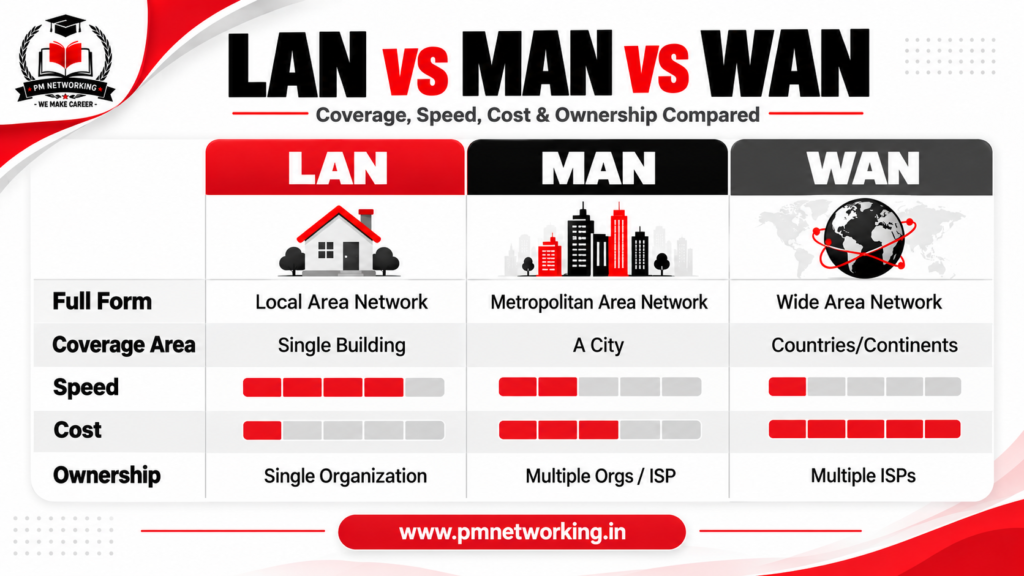
LAN vs MAN vs WAN: Key Differences
| Point | LAN | MAN | WAN |
|---|---|---|---|
| Full form | Local Area Network | Metropolitan Area Network | Wide Area Network |
| Coverage area | Single building or campus | A city or large metro area | Countries or continents |
| Ownership | Usually owned by one organization | Often owned by a group of organizations or a service provider | Owned by multiple organizations/ISPs |
| Speed | Highest (short distances) | Moderate | Generally lower than LAN, due to long distances |
| Cost | Lowest to set up | Moderate | Highest, due to infrastructure and leased lines |
| Example | Office or home network | City-wide cable network | The internet |
| Common devices | Switches, access points | Switches, fiber links | Routers, WAN optimizers |
Why Coverage Area Is the Core Difference
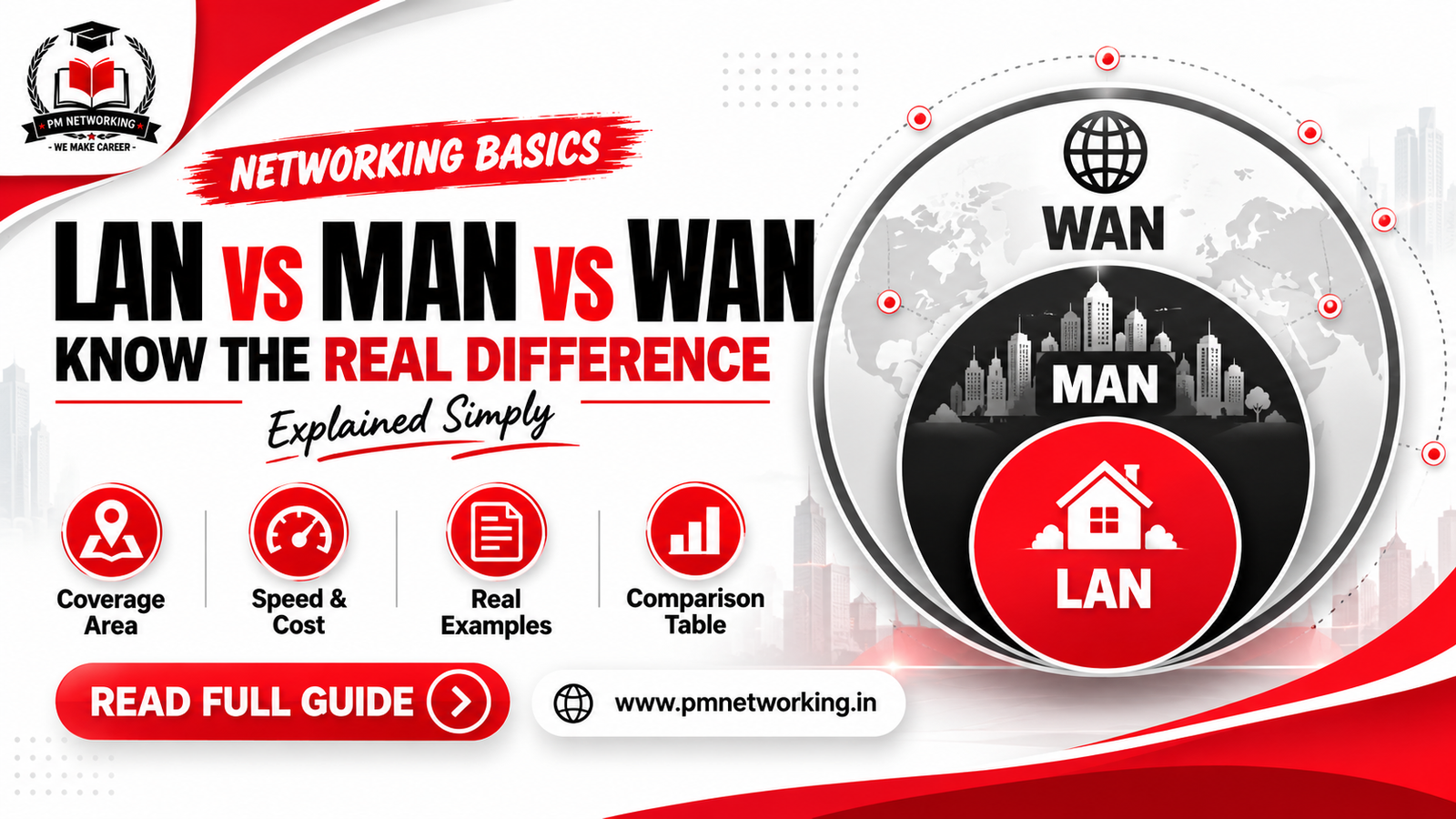
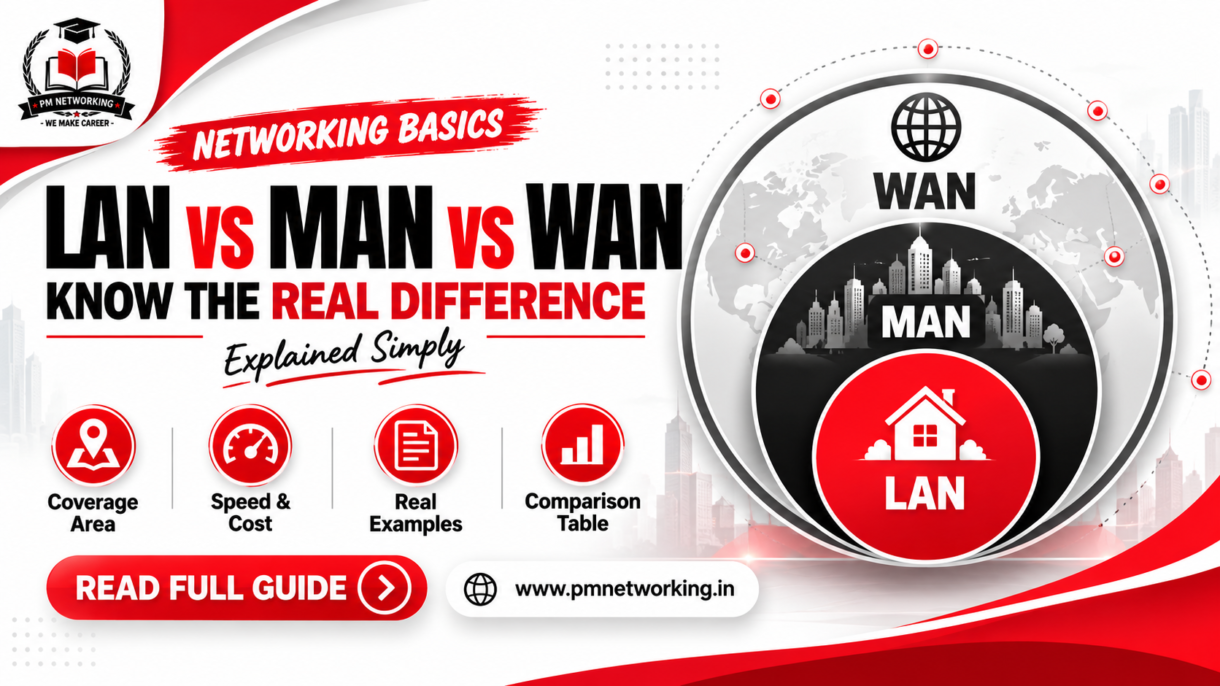
The easiest way to remember LAN, MAN and WAN difference is to picture concentric circles. A LAN is the smallest circle — one building. A MAN is a bigger circle around it — one city. A WAN is the biggest circle — multiple cities or countries. Everything else (speed, cost, ownership, technology used) follows from that one core difference in scale.
Real-World Examples to Make It Click
- LAN: The Wi-Fi network in your college lab, where all computers can access the same printer and local server.
- MAN: A city government’s network connecting its offices across different parts of the same city.
- WAN: A bank with branches in Mumbai, Delhi and Bangalore, all connected to a central data center.
Is PAN Also Part of This Comparison?
You may also come across PAN (Personal Area Network), which covers an even smaller area than a LAN — typically a few meters, like Bluetooth connecting your phone to your earphones. It’s sometimes included alongside LAN, MAN and WAN in comparison questions, so it’s worth knowing: PAN < LAN < MAN < WAN, in order of increasing coverage area.
Frequently Asked Questions
1. What is the main difference between LAN, MAN and WAN?
The main difference is coverage area. LAN covers a single building or campus, MAN covers a city, and WAN covers countries or continents.
2. Which is faster, LAN or WAN?
LAN is generally faster because it covers shorter distances with fewer devices in between. WAN speeds can vary widely depending on the infrastructure and distance involved.
3. Is the internet a WAN?
Yes, the internet is the largest and most well-known example of a WAN, connecting networks across the entire world.
4. Who owns a MAN?
A MAN can be owned by a single large organization, a group of organizations, or a telecom/internet service provider that offers connectivity across a city.
5. Can a WAN be made up of multiple LANs?
Yes. A WAN often connects multiple LANs (such as different office branches) across different locations into one larger network.
6. Is MAN commonly used in India?
MAN-style deployments exist, often run by city governments, universities, or ISPs, though many organizations today use WAN technologies like SD-WAN to connect multiple locations directly, bypassing the need for a dedicated MAN layer.
Conclusion
LAN, MAN and WAN difference ultimately comes down to scale: how large an area the network needs to cover, and what that means for cost, speed and ownership. Understanding this distinction is a basic but essential building block for any networking career. If you want to build a strong foundation in networking concepts like this, explore the CCNA course at PM Networking.

PM Networking is an emerging leader in the ed-tech space, founded by Praphul Mishra in 2020 with a vision to democratize tech education. The journey of PM Networking began as a YouTube channel with the sole purpose of sharing valuable knowledge in the fields of Networking, Cyber Security, and Cloud Computing. What started as a humble effort to educate has rapidly evolved into a comprehensive online learning platform that caters to the growing demand for specialized IT skills. PM Networking stands out in the crowded ed-tech industry by providing affordable, world-class training tailored to the needs of aspiring IT professionals. The platform is dedicated to equipping learners with the skills and knowledge required to excel in the highly competitive tech industry. Whether it’s Networking fundamentals, advanced Cyber Security protocols, or mastering the complexities of Cloud Computing, PM Networking offers a range of courses designed to cater to different levels of expertise.
0 Comments