




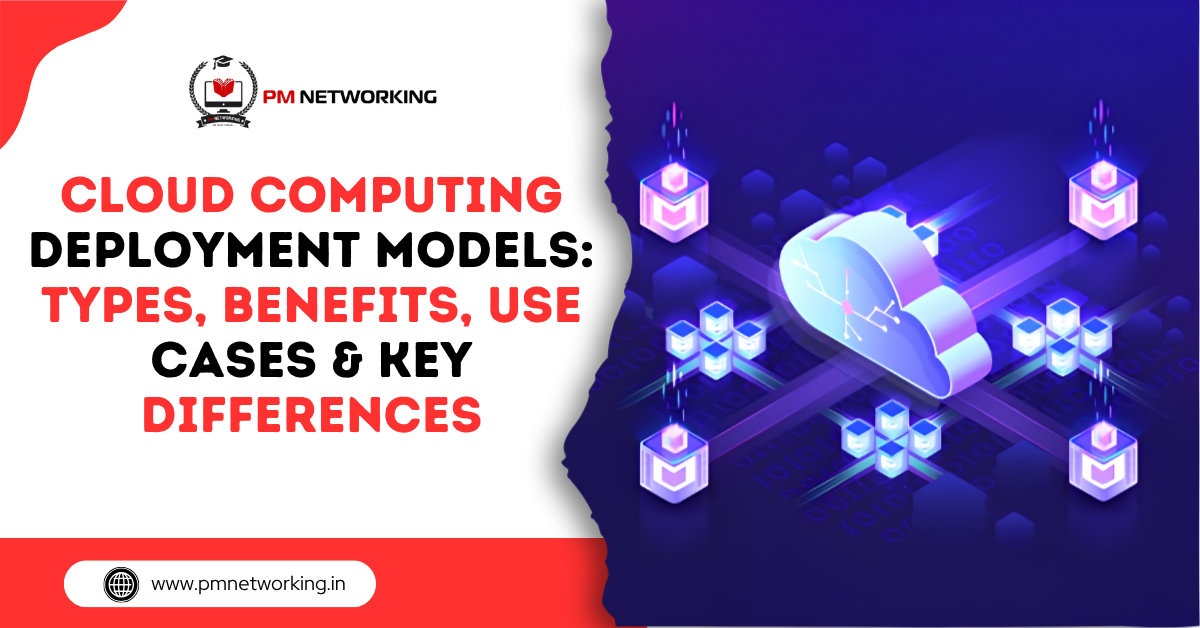
Cloud computing has kind of shifted the way companies keep their data , run software, and manage IT resources a bit more smoothly and in a more shared manner than before. Instead of grabbing costly hardware up front, organizations can use cloud services to reach computing resources whenever they actually need them. Still, every business isn’t built the same, so requirements might look very different. That’s basically why getting a grasp on Cloud Computing Deployment Models is so important.
These deployment models provide varying degrees of security, flexibility, control, and cost—so the decision isn’t random. Picking the right setup usually depends on your company size, available budget, compliance requirements, and what kind of workload you’re running.
In this guide, you’ll discover the core Cloud Computing Deployment Models, plus what each one is good for, the main advantages, real world use cases, and how they separate from each other.
What Are Cloud Computing Deployment Models?
Cloud Computing Deployment Models pretty much explain how cloud infrastructure is arranged, looked after, and actually made available to users. They point to where your data and applications end up sitting, plus who is doing the day-to-day managing of the whole cloud environment. The four main cloud deployment models are:
- Public Cloud
- Private Cloud
- Hybrid Cloud
- Community Cloud
Each model is designed to meet different business needs.
Types of Cloud Computing Deployment Models
1. Public cloud
A public cloud is owned and run by a third party cloud computing service provider. Several organizations share basically the same cloud setup, but each client’s information stays isolated and secure, which is kind of the point.
Benefits
- Lower prices
- Easy to grow
- No equipment maintenance
- Quick rollout
Best Use Cases
- Small businesses
- Startups
- Website hosting
- Software building
- Backup and storage
2. Private cloud
A private cloud is reserved for one organization only. It can be set up on-site, or hosted by an external provider, but only a single business uses that infrastructure , end of story.
Benefits
- Stronger security
- More control
- Better compliance
- Tailored infrastructure
Best Use Cases
- Banks
- Healthcare organizations
- Government agencies
- Large enterprises
- Companies managing sensitive data
3. Hybrid cloud
A hybrid cloud mixes public and private cloud environments together. Organizations can keep sensitive data inside the private cloud while still using the public cloud for tasks that are less critical, sometimes.
Benefits
- More adaptability
- Cost management that’s steadier
- Improved disaster recovery
- Simple workload balancing
Best Use Cases
- Growing businesses
- Seasonal workloads
- E-commerce organizations
- Businesses with shifting resource demands
4. Community cloud
A community cloud is shared across multiple organizations that have comparable security standards, compliance rules, or operational requirements. It’s sort of like a shared neighborhood, but with guardrails.
Benefits
- Costs are divided
- Solid security
- Regulations matched to the industry
- Better teamwork
Best Use Cases
- Educational institutions
- Healthcare networks
- Research organizations
Benefits of Cloud Computing Deployment Models
Choosing the right Cloud Computing deployment models offers several advantages, like faster provisioning and easier scaling. It can also improve cost efficiency and resilience, while you keep workloads more flexible. Some key benefits include:
- Reduced IT infrastructure costs
- Better scalability
- Improved business flexibility
- Faster deployment
- Enhanced security options
- Business continuity
- Easy remote access
- Improved collaboration
Key Differences Between Cloud Deployment Models
The biggest differences between the deployment models include:
- Ownership: Public clouds are shared, while private clouds are dedicated to one organization.
- Security: Private and community clouds offer higher security than public clouds.
- Cost: Public cloud is usually the most affordable option.
- Scalability: Public and hybrid clouds provide excellent scalability.
- Control: Private clouds give organizations greater control over their infrastructure.
How to Choose the Right Cloud Deployment Model?
Selecting the right cloud model depends on several factors.
Consider the following before making a decision:
- Business size
- Budget
- Security requirements
- Compliance regulations
- Data sensitivity
- Future growth plans
- IT management capabilities
For example, startups often choose public cloud services because they are affordable, while healthcare organizations usually prefer private clouds for better data security.
Common Use Cases of Cloud Computing Deployment Models
Different industries use cloud deployment models in different ways.
Some common examples include:
- Healthcare: Protecting patient records using private cloud.
- Retail: Running e-commerce websites on public cloud.
- Education: Sharing learning resources through community cloud.
- Finance: Managing confidential customer data using private cloud.
- Manufacturing: Combining production systems with hybrid cloud solutions.
Each deployment model supports different business goals and operational needs.
Challenges of Cloud Deployment Models
Some common challenges include:
- Data privacy concerns
- Security risks
- Compliance requirements
- Vendor dependency
- Internet connectivity issues
- Migration complexity
- Cost management for growing workloads
Proper planning helps organizations overcome these challenges successfully.
Best Practices for Cloud Deployment
To get the most value from cloud computing:
- Understand your business requirements.
- Choose the right deployment model.
- Secure sensitive business data.
- Monitor cloud performance regularly.
- Create backup and disaster recovery plans.
- Train employees on cloud security.
- Review cloud costs frequently.
Conclusion
Understanding cloud computing deployment model is pretty much essential for companies trying to use cloud technology in a real way. Each model, public private hybrid, and community… has its own kind of benefits depending on what your business is aiming for, how tight the budget is and what kind of security you actually need.
If you look at your organization’s requirements carefully , you can pick the right deployment model, to boost efficiency , trim expenses, strengthen safeguards, and also make room for future growth. Since cloud technology keeps evolving, deciding on the right deployment strategy is going to stay a big part of constructing a flexible, and successful digital business.
FAQs
Q1. What are Cloud Computing Deployment Models, like really?
Cloud Computing Deployment Models are basically different approaches for where cloud infrastructure ends up, and how it is run. You’ll usually hear about public cloud, private cloud, hybrid cloud, and community cloud… all with slightly different setups.
Q2. Which cloud deployment model is the most secure, in practice?
Most folks tend to say a private cloud is the safest route, because it remains dedicated to a single organization and that translates into more hand-on control, with better supervision over data, and the underlying infrastructure too.
Q3. Which cloud deployment model is best for small businesses?
Often public cloud works out better for smaller companies, since it tends to be cheaper, easier to scale, and you don’t have to manage so much internal infrastructure stuff.
Q4. Why are Cloud Computing Deployment Models important then?
They let a business pick an appropriate tradeoff between cost, security, scalability, and control, based on how the organization actually operates and what compliance obligations it has to meet.

PM Networking is an emerging leader in the ed-tech space, founded by Praphul Mishra in 2020 with a vision to democratize tech education. The journey of PM Networking began as a YouTube channel with the sole purpose of sharing valuable knowledge in the fields of Networking, Cyber Security, and Cloud Computing. What started as a humble effort to educate has rapidly evolved into a comprehensive online learning platform that caters to the growing demand for specialized IT skills. PM Networking stands out in the crowded ed-tech industry by providing affordable, world-class training tailored to the needs of aspiring IT professionals. The platform is dedicated to equipping learners with the skills and knowledge required to excel in the highly competitive tech industry. Whether it’s Networking fundamentals, advanced Cyber Security protocols, or mastering the complexities of Cloud Computing, PM Networking offers a range of courses designed to cater to different levels of expertise.
0 Comments