



Finding the right job is not always about sending more applications. Sometimes, it’s the person who helps you find your next opportunity, someone you met at an event, or even someone you connected with online just a few months ago. That’s where professional networking can be quite advantageous. A good Professional Networking Platform gives you a place to build these connections, share your work, learn from people in your field and discover career opportunities. However, only creating an account and adding hundreds of people won’t do much on its own.
The real value comes from how you use the platform.
No matter whether you’re a student looking for your first internship, a working professional planning your next move, or someone trying to build a stronger presence in your industry, Professional Networking Course can really help you get noticed and stay connected.
So, let’s look at what a professional networking platform is, why it matters, and how you can actually use one for career growth.
What Is a Professional Networking Platform?
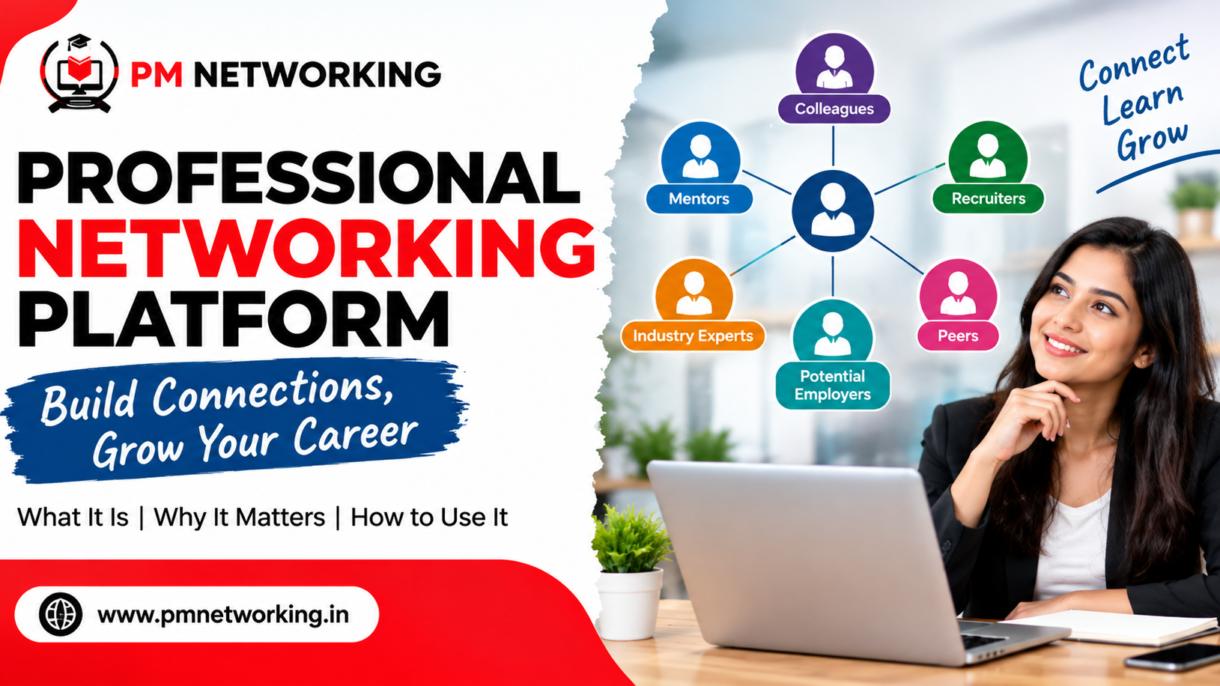
A Professional Networking Platform is an online space where people can connect with others based on their careers, skills, education, industries as well as professional interests.
Unlike platforms that are mainly built for entertainment or personal conversations, professional networking platforms are focused more on careers and work-related connections.
You can use them to:
- Create a professional profile
- Connect with people in your industry
- Search for jobs and internships
- Share your work and achievements
- Follow companies and industry experts
- Learn about new career opportunities
- Join professional communities
- Build relationships with recruiters and hiring managers
Why Is Professional Networking Important for Career Growth?
You may have a great resume and strong skills, but that doesn’t always mean the right people will find you. Networking Course
helps you become more visible within your specific industry.
For example, you might connect with someone who works at a company you’re interested in. Over time, you can interact with their posts, learn more about their work, and can also have meaningful conversations.
Later, when a suitable opening comes up, that connection may already know who you are.
Of course, networking doesn’t guarantee a job. However, it can help you discover opportunities that you might not come across through regular job searches.
What Makes a Good Professional Networking Platform?
Not every platform will work equally well for every single person. The right choice depends on your career goals, industry, experience, and the kind of people you want to connect with.
Here are some features worth looking for:
1. A Strong Professional Profile
A good platform should let you create a profile that clearly shows who you are and what you do.
Your profile can include your:
- Education
- Work experience
- Skills
- Certifications
- Projects
- Portfolio
- Professional interests
2. Industry Connections
Networking becomes more useful when you can find people who actually work in your field.
A platform should make it easy to search for professionals by job title, industry, company, location, or area of expertise.
This can help you connect with people who have similar career interests or experience.
3. Job Opportunities
Many professional networking platforms also include job-search features. You can find roles, follow companies, and sometimes contact recruiters directly. This is useful because job searching and networking can happen in the same place.
4. Content Sharing
Being able to share posts, projects, articles, or professional opinions can help you build visibility. You don’t need to post every day. Even sharing something useful occasionally can help people understand your interests as well as your expertise.
5. Direct Communication
A messaging feature is also very important. It gives you a way to start conversations with people instead of simply adding them to your network and never interacting again. A short, polite message can sometimes be the beginning of a useful professional relationship.
Best Professional Networking Platforms for Career Growth
There are several platforms you can explore, though they serve slightly different purposes, such as:
LinkedIn is one of the most widely used platforms for professional networking and career development.
You can create a professional profile, connect with people, search for jobs, follow companies, share content, and communicate with recruiters.
It also covers a wide range of industries, which makes it useful whether you’re starting your career or already have several years of experience.
For many job seekers, LinkedIn can work as both a professional profile as well as a networking space.
X
X can also be useful for professional networking, particularly in industries such as technology, marketing, media, startups, and content creation.
People often share industry news, opinions, projects, and useful resources.
However, the platform is broader than professional networking, so you’ll need to actively follow relevant people and communities to get career-related value from it.
GitHub
GitHub is especially useful for developers and people working in technical fields. Rather than just listing your coding skills, you can show actual projects, contributions, and code.
For technical professionals, this can make your online presence more practical because people can see what you’ve worked on.
Behance
Behance is particularly useful for designers, illustrators, photographers, and other creative professionals.
You can showcase projects through a visual portfolio and connect with other people in the creative industry.
For someone whose work is highly visual, showing the actual work can be more useful than simply listing skills on a resume.
How to Use a Professional Networking Platform Effectively
Creating a profile is only the first step. Here are some simple ways to get more value from professional networking:
Complete Your Profile
Start with the basics. Use a clear profile photo, write a simple headline, describe your experience, and add relevant skills and projects.
If you’re a student or fresher, don’t worry if you don’t have much professional experience yet. You can highlight internships, academic projects, certifications, volunteer work, or personal projects instead.
Connect With the Right People
You don’t need thousands of connections just focus on people who are relevant to your career goals, such as:
- Industry professionals
- Recruiters
- Hiring managers
- Former colleagues
- College alumni
- Mentors
- People working at companies you’re interested in
Don’t Make Every Conversation About a Job
This is one of the biggest mistakes people make. If your first message is always, “Please give me a job,” people may not be very interested in continuing the conversation.
Instead, start naturally.
You could ask about their career path, comment on something they shared, or ask a thoughtful question about their industry.
Professional relationships usually develop gradually.
Share What You’re Learning
You don’t need to be an industry expert to create useful content.
If you’re learning something new, you can share what you learned, talk about a project you’re working on, or discuss an interesting industry development.
This can also help you become more comfortable communicating your ideas.
Engage With Other People’s Content
Networking isn’t only about posting.
Commenting on useful posts, congratulating people on achievements, asking questions, and sharing relevant content can help you stay visible.
However, try to make your interactions meaningful. Comments such as “Great post!” don’t really start a conversation.
Professional Networking for Students and Freshers
You don’t have to wait until you get your first job to start networking.
In fact, college can be a very great time to start.
Students can connect with alumni, professors, industry professionals, recruiters, and other students who share similar interests.
You can also use professional networking platforms to find internships, attend virtual events, learn about different career paths, and understand what employers are looking for.
As a fresher, your network may be small at first. That’s completely normal.
Start with people you already know and gradually expand it.
Professional Networking for Experienced Professionals
Networking is just as useful once you’ve started working.
You can use it to stay updated about your industry, learn about leadership opportunities, connect with peers, and explore potential career moves.
You can also build a reputation around your area of expertise by sharing useful knowledge and participating in industry conversations.
As your career grows, your professional network can grow with it.
Common Professional Networking Mistakes to Avoid
Networking sounds simple, though it’s easy to approach it the wrong way. Here are some common mistakes to avoid:
Adding everyone you see: A huge network isn’t automatically a useful network.
Sending generic messages: A personalized message usually feels more genuine.
Only reaching out when you need something: Try to build relationships before you need a favor.
Ignoring your profile: Your profile is often the first thing someone sees.
Posting only about yourself: Share useful information and engage with others as well.
Being too promotional: People generally respond better to useful and genuine conversations than constant self-promotion.
How Often Should You Network?
There isn’t a perfect number of connections or messages you need to make every week.
Consistency matters more.
You could spend 10–15 minutes a few times a week checking industry updates, responding to posts, connecting with relevant professionals, and sharing something useful.
Over time, these small efforts can add up.
The goal isn’t to turn networking into another task you have to rush through. It is to make professional relationship-building a normal part of your career.
Final Thoughts
The best Professional Networking Platform is ultimately the one that helps you connect with the right people and supports the way you want to grow your career.
For some people, that may mean finding jobs and recruiters. For others, it could mean showcasing projects, learning from industry experts, or building a reputation around a particular skill.
However, the platform itself is only one part of the process.
Your profile, the people you connect with, the conversations you have, and the value you share all matter as well. As it is with most professional relationships, genuine and consistent interaction usually goes much further than simply collecting connections.
So, don’t focus only on getting more connections. Focus on building better professional relationships.
FAQs
What is a Professional Networking Platform?
A Professional Networking Platform is an online space where people can connect with professionals, companies, recruiters, and others in their industry. You can use it to find jobs, share your work, learn from others, and build professional relationships.
Which Professional Networking Platform is best for job seekers?
It depends on your industry and career goals. LinkedIn is widely used for professional networking and job searches, while platforms such as GitHub and Behance can be especially useful for technical and creative professionals.
Can students use professional networking platforms?
Yes, and they don’t need to wait until they have work experience. Students can connect with alumni, recruiters, professionals, and potential mentors, as well as look for internships and learn more about different career paths.
How can I grow my professional network?
Start by connecting with people who are relevant to your field and career goals. Engage with their content, share useful information, join professional communities, and have genuine conversations rather than only reaching out when you need a job.
Does professional networking really help with career growth?
It can, networking can help you discover job opportunities, learn about your industry, meet experienced professionals, and become more visible in your field. However, it works best when you focus on building genuine relationships rather than expecting immediate results.
For beginners looking to build a career in networking, the CCNA 200-301 Course is a practical starting point for developing foundational networking knowledge and career-ready skills. Professionals who want to progress further can consider a CCNA + CCNP Combo Course, which builds on these fundamentals with more advanced networking concepts and skills.

PM Networking is an emerging leader in the ed-tech space, founded by Praphul Mishra in 2020 with a vision to democratize tech education. The journey of PM Networking began as a YouTube channel with the sole purpose of sharing valuable knowledge in the fields of Networking, Cyber Security, and Cloud Computing. What started as a humble effort to educate has rapidly evolved into a comprehensive online learning platform that caters to the growing demand for specialized IT skills. PM Networking stands out in the crowded ed-tech industry by providing affordable, world-class training tailored to the needs of aspiring IT professionals. The platform is dedicated to equipping learners with the skills and knowledge required to excel in the highly competitive tech industry. Whether it’s Networking fundamentals, advanced Cyber Security protocols, or mastering the complexities of Cloud Computing, PM Networking offers a range of courses designed to cater to different levels of expertise.
0 Comments