





In networking, models help us understand how data moves between devices. They give a clear structure, so communication is organized and reliable. Without them, networks would be chaotic, and devices wouldn’t know how to communicate with one another.
Ever wondered how data travels seamlessly across networks? OSI and TCP/IP models provide the framework behind it. Understanding OSI and TCP/IP model is essential to see how devices communicate over networks, because it shows how each layer has a specific role in sending and receiving information.
Read on to learn the difference between OSI and TCP/IP model and more.
What is the OSI Model?
The OSI model (Open Systems Interconnection) is a framework that helps explain how data travels across networks. It divides communication into 7 layers of OSI model, so each part of the process is easier to understand. This makes networking more organized and helps different devices and systems work together.
The purpose of the OSI model is standardizing network communication. Since everyone follows the same model, devices from different vendors can communicate with each other without confusion.
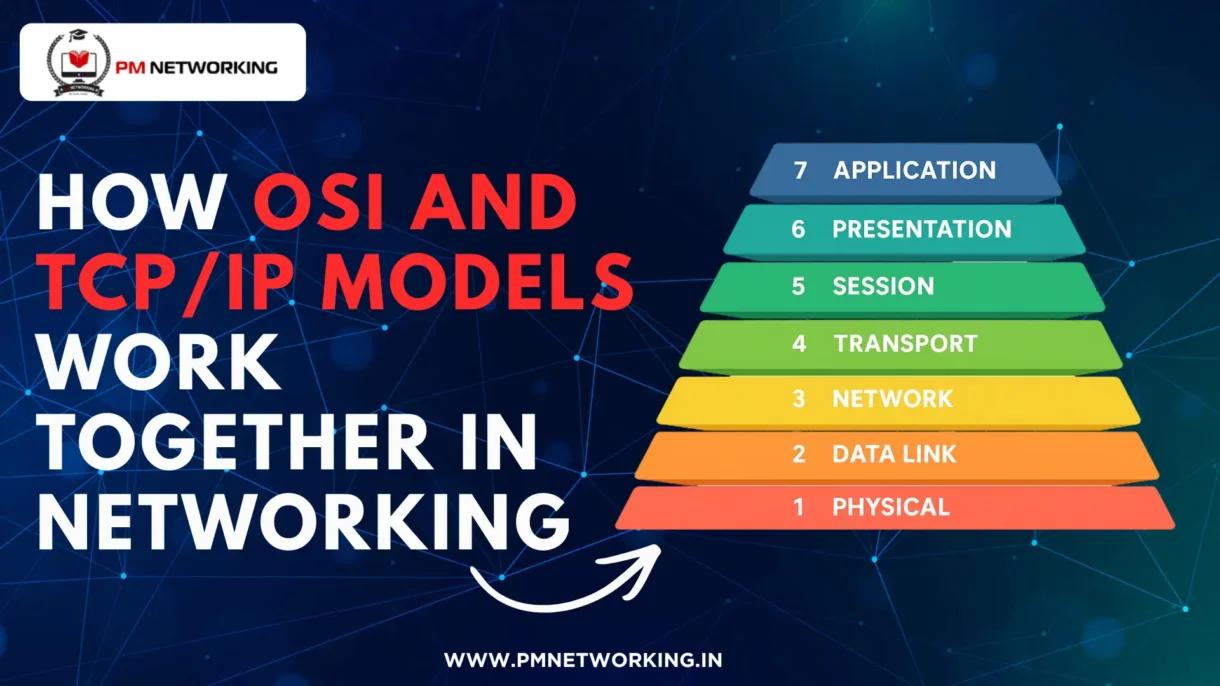
The 7 OSI layers are:
- Physical Layer – This deals with actual hardware like cables and switches.
- Data Link Layer – This layer deals with the transmission of data between devices on the same network. E.g., your switch makes sure that frames reach the right computer. Learn more about why Spanning Tree Protocol is important in network switching.
- Network Layer – Manages routing between networks. A real-life example here is IP routing, which determines the best path for data.
- Transport Layer – Makes sure that data arrives correctly and in order. TCP is used here, like when your browser waits for all pieces of a webpage.
- Session Layer – Keeps communication sessions alive. For example, when you log into a video call and your session stays connected.
- Presentation Layer – Translates data into a format the application can understand. For example, encryption or converting a video file so it can play on your device.
- Application Layer – Interfaces with the user. Sending an HTTP request to load a website or checking email happens here. Understand related concepts like what is DNS and DHCP.
The difference between OSI and TCP/IP model becomes clear when we see OSI layers, because OSI has seven distinct layers while TCP/IP combines some of these layers into fewer ones. Understanding OSI first helps make TCP/IP easier to grasp.
What is the TCP/IP Model?
The TCP/IP model (Transmission Control Protocol/Internet Protocol) is a simpler framework that shows how data travels over the internet and other networks. While OSI is more of a teaching tool, TCP/IP is what networks actually follow to send and receive data reliably.
While the OSI Model is more of a teaching tool, TCP/IP is what networks actually follow to send and receive data reliably.
The four TCP/IP layers are:
- Network Interface Layer – Manages physical connections and local network delivery, similar to OSI’s Physical and Data Link layers.
- Internet Layer – Manages addressing and routing, just like the OSI Network layer. IP works in this case to find the optimal route.
- Transport Layer – Makes sure that data is received securely and in order, mapping directly to OSI’s Transport layer. TCP and UDP work here.
- Application Layer – Covers everything the user interacts with, including OSI’s Application, Presentation, and Session layers. Examples include web browsing, email, and file transfers.
When we look at both together, OSI and TCP/IP model together explain how data flows in networks. The mapping between layers helps understand how data moves from your device to another across the internet.
How OSI and TCP/IP Models Work Together
The OSI and TCP/IP models illustrate how the flow of data occurs between devices. Each layer of the TCP/IP maps to one or more OSI layers and therefore helps understand both theory and real-world networking.
For example, when you send an email or open a website, data flows through the layers step by step. Application layer processes the request, the Transport layer makes sure it arrives safely, the Network layer chooses the route, the Data Link layer prepares it for the local network and the Physical layer sends it over cables or Wi-Fi.
By combining some of the layers, TCP/IP simplifies the OSI model, making it easier to implement in real networks. Although OSI has 7 layers of OSI model, TCP/IP uses four, thereby keeping things practical while still following the same basic flow.
By looking at both models, we can see exactly how devices communicate. Both OSI and TCP/IP model together explain how data flows in networks, from your computer to servers and back.
Why Understanding Both Models is Important
Understanding the OSI and TCP/IP model helps in troubleshooting networking issues in a more efficient manner. When something goes wrong, understanding the layers helps identify where the problem might be.
In addition, the OSI and TCP/IP models provide a solid foundation for certifications like CCNA or Network+. Because the exam is based on networking concepts, knowledge of these models makes studying much easier.
Understanding both models helps explain network protocols, IP routing, and how data is encapsulated and sent over networks. This makes it clear why packets travel the way they do.
On a practical level, it helps when configuring routers, switches, or firewalls. Knowing what each of these layers does allows easier network setup with fewer chances of configuration errors.
Common Misconceptions About OSI and TCP/IP Models
Some people think OSI is used directly in real networks and this simply is not true. Actually, it’s just a reference model used to understand networking concepts and TCP/IP is what networks really use.
Others believe that TCP/IP has “fewer layers” and is incomplete. Although it has four layers, mapping to OSI is still possible, so the concepts match.
For example, TCP/IP’s Application layer covers OSI’s Application, Presentation, and Session layers. Understanding this clears confusion and shows how the two models work together in real-world networks.
Conclusion
The OSI and TCP/IP model complement each other perfectly. OSI provides a solid theoretical representation, whereas TCP/IP illustrates the real-life working of the network.
Knowing both, you will be able to see how data flows step by step, from your computer to another device across the network. OSI helps explain the theory and TCP/IP makes it practical.
Try to visualize data moving through each layer in both models. Doing this makes troubleshooting, configuring devices, and learning networking much easier as well as intuitive.
FAQ
1. What is the difference between OSI and TCP/IP model?
OSI has 7 layers and is mainly theoretical, while TCP/IP has four layers and is used in real networks. The difference between OSI and TCP/IP model helps understand theory versus practice.
2. How do OSI and TCP/IP models work together in networking?
TCP/IP layers map to OSI layers, showing how data flows in real networks. OSI and TCP/IP model together explain how devices communicate step by step.
3. Why is OSI model still important if TCP/IP is used in practice?
OSI is a reference model that helps understand networking concepts clearly. Although TCP/IP is used in practice, OSI guides learning and troubleshooting.
4. How many layers are in OSI and TCP/IP models?
OSI has 7 layers: Physical, Data Link, Network, Transport, Session, Presentation, and Application. TCP/IP has four layers: Network Interface, Internet, Transport, and Application.
5. Can understanding these models help in troubleshooting network issues?
Yes! Knowing which layer handles which function helps find problems faster. It also makes configuring routers, switches, and firewalls easier.

PM Networking is an emerging leader in the ed-tech space, founded by Praphul Mishra in 2020 with a vision to democratize tech education. The journey of PM Networking began as a YouTube channel with the sole purpose of sharing valuable knowledge in the fields of Networking, Cyber Security, and Cloud Computing. What started as a humble effort to educate has rapidly evolved into a comprehensive online learning platform that caters to the growing demand for specialized IT skills. PM Networking stands out in the crowded ed-tech industry by providing affordable, world-class training tailored to the needs of aspiring IT professionals. The platform is dedicated to equipping learners with the skills and knowledge required to excel in the highly competitive tech industry. Whether it’s Networking fundamentals, advanced Cyber Security protocols, or mastering the complexities of Cloud Computing, PM Networking offers a range of courses designed to cater to different levels of expertise.
0 Comments